
UK buying shortlist
Best Jump Starters with Power-Bank Functions in the UK (2026)
Written by Outdoors & Mobility Desk Outdoors and mobility editorial desk · Car Jump Starters beat · reviewed 03/09/2026
Choose the jump-starting fit first, then decide whether the documented USB output is worth drawing down the same stored energy you may need for the vehicle. These four preserved exact models cover compact 500A and 1000A packs plus two 60W USB-C alternatives.
Quick answer · Top 4
Compare all four before checking exact sources and retailer options
Retailer buttons are affiliate links and may earn commission. Product details explain identity, specifications and buying checks; they do not confirm live price, stock or universal fit.
Pick 1 - Best compact all-rounder
Ring RJS020 Compact Jump Starter
Best for:Drivers wanting a compact jump pack plus documented phone-charging outputs.
Trade-off:Using it as a power bank reduces the stored charge available for a later starting attempt.
Open lead reviewPick 2 - Best lower-output petrol option
NOCO GB20 500A Jump Starter
Best for:Drivers of a compatible petrol vehicle who want a compact current pack with a documented USB device-power function.
Trade-off:The maker does not list it for diesel engines, and using it as a power bank reduces stored charge available for a later starting attempt.
Open shortlist reviewPick 3 - Best 60W USB-C alternative
Ring RJS030 Compact Jump Starter
Best for:Drivers needing the maker's broader engine guidance and a higher-output USB-C route.
Trade-off:The larger pack takes more boot space and maker engine guidance is not a start guarantee.
Open shortlist reviewPick 4 - Best Boost X device-power option
NOCO Boost X GBX45 1250A Jump Starter
Best for:Drivers prioritising USB-C recharge and device-power flexibility within the maker's stated engine range.
Trade-off:Faster device charging can deplete reserve charge and requires compatible cables and chargers.
Check NOCO Boost X GBX45 1250A Jump Starter on AmazonUse-context outdoor voice
Frames outdoor and mobility choices around conditions, storage and compatibility rather than broad performance promises.
Outdoors & Mobility Desk buyer lens: Start with where, when and how the item will be used before weighing its headline features. Check the exact storage, vehicle, destination or use-condition requirement before checkout.
Decision checks: conditions and storage · vehicle or destination fit · current rules and source checks
The shortlist
Four options, with the trade-offs visible
Use the fit, limitations and checkout checks before opening a retailer page. Confirm the current price, stock, delivery and returns with the retailer.
Pick 1
First comparison point
Best compact all-rounder
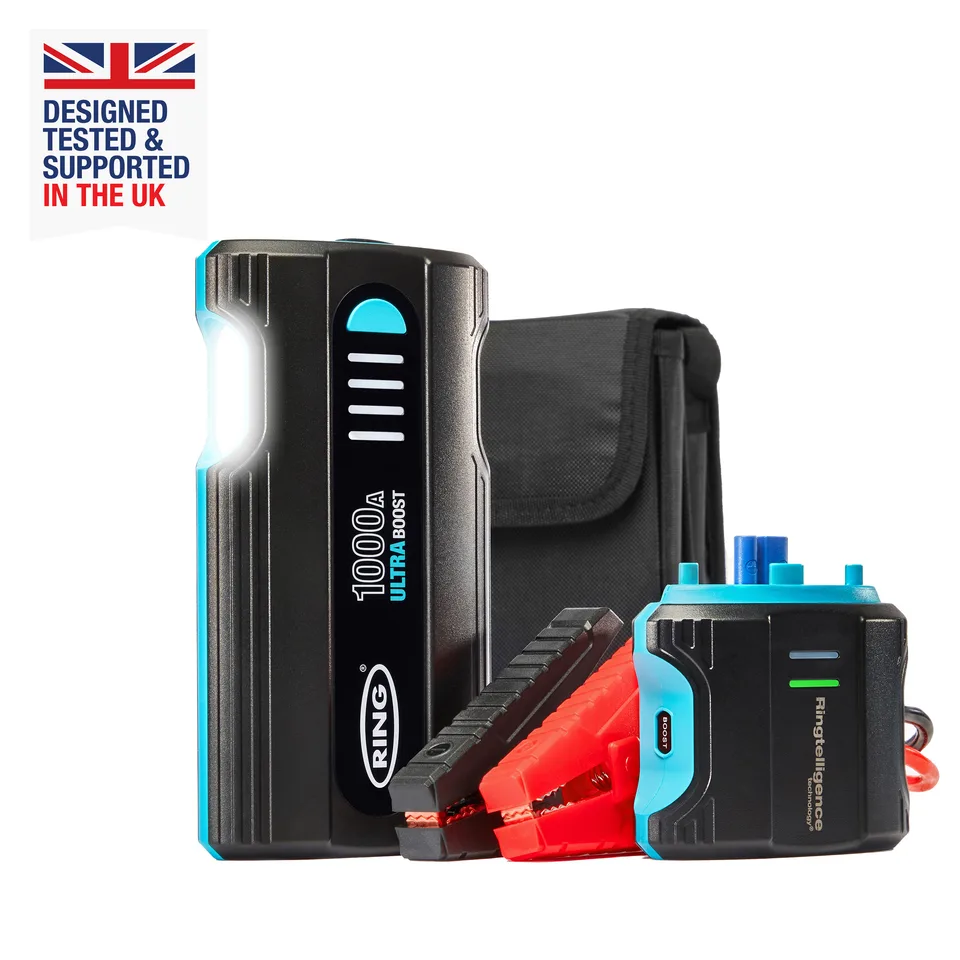
Ring RJS020 Compact Jump Starter
Verdict
Choose this when a compact 1000A jump pack, maker guidance up to 5L petrol or 2L diesel, and 30W USB-C device charging fit the vehicle and travel routine.
Highlights
- Drivers wanting a compact jump pack plus documented phone-charging outputs.
Drawbacks
- Using it as a power bank reduces the stored charge available for a later starting attempt.
Buyer fit
Best for
- Drivers wanting a compact jump pack plus documented phone-charging outputs.
Not for you if
- Using it as a power bank reduces the stored charge available for a later starting attempt.
Check before buying
- Confirm vehicle fit, charging cables, clamp procedure and recharge state before each journey.
Pick 2
Best lower-output petrol option
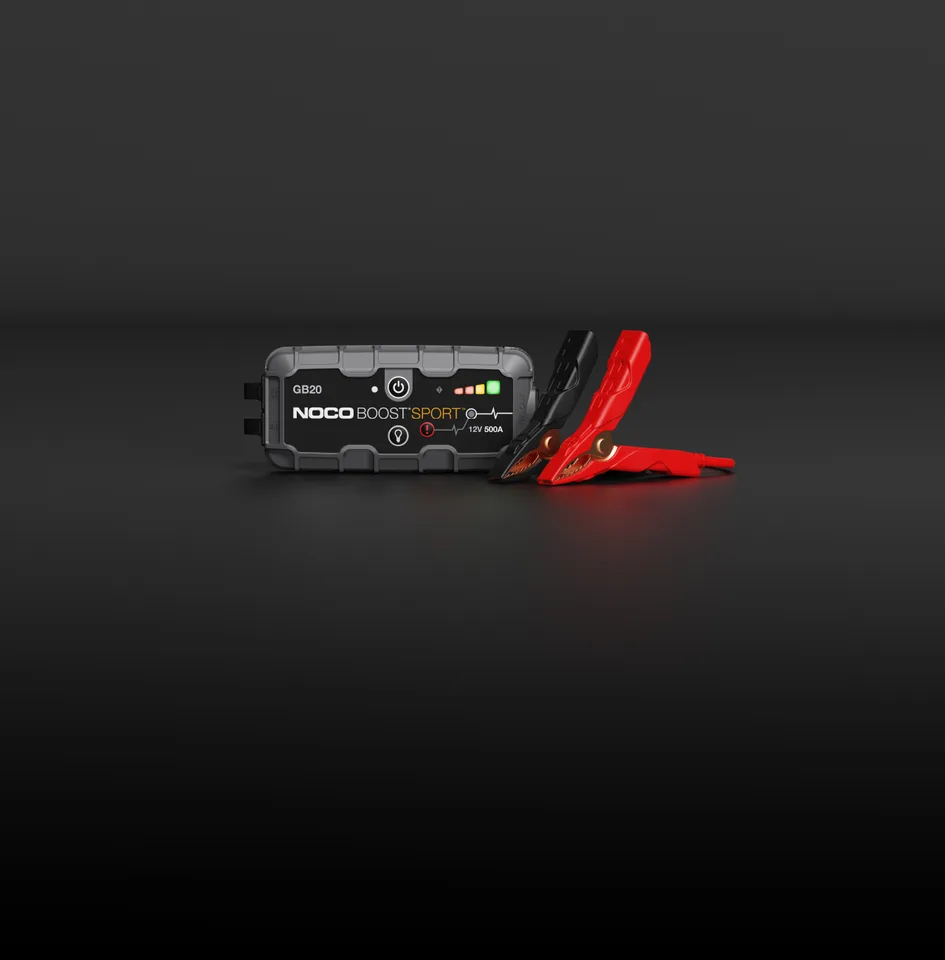
NOCO GB20 500A Jump Starter
Verdict
Choose this for a compatible 12V lead-acid petrol vehicle within NOCO guidance up to 4.0L when a smaller 500A pack and basic USB charging are enough.
Highlights
- Drivers of a compatible petrol vehicle who want a compact current pack with a documented USB device-power function.
Drawbacks
- The maker does not list it for diesel engines, and using it as a power bank reduces stored charge available for a later starting attempt.
Buyer fit
Best for
- Drivers of a compatible petrol vehicle who want a compact current pack with a documented USB device-power function.
Not for you if
- The maker does not list it for diesel engines, and using it as a power bank reduces stored charge available for a later starting attempt.
Check before buying
- Confirm petrol-engine fit, 12V lead-acid compatibility, stored charge, clamp access and the current Halfords return terms.
Pick 3
Best 60W USB-C alternative
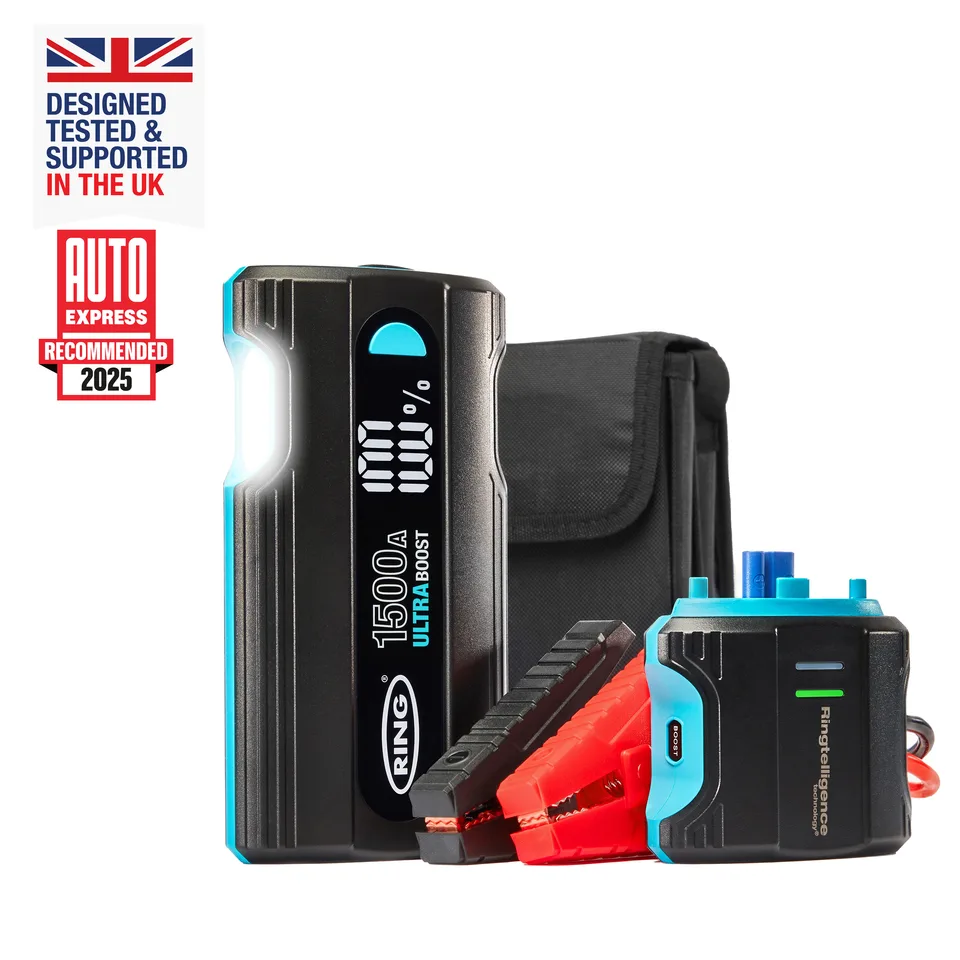
Ring RJS030 Compact Jump Starter
Verdict
Choose this when Ring guidance up to 6L petrol or 3L diesel and 60W USB-C input/output are useful enough to justify the larger 1500A pack.
Highlights
- Drivers needing the maker's broader engine guidance and a higher-output USB-C route.
Drawbacks
- The larger pack takes more boot space and maker engine guidance is not a start guarantee.
Buyer fit
Best for
- Drivers needing the maker's broader engine guidance and a higher-output USB-C route.
Not for you if
- The larger pack takes more boot space and maker engine guidance is not a start guarantee.
Check before buying
- Match the exact vehicle battery and engine to the maker guidance and manual before use.
Pick 4
Best Boost X device-power option
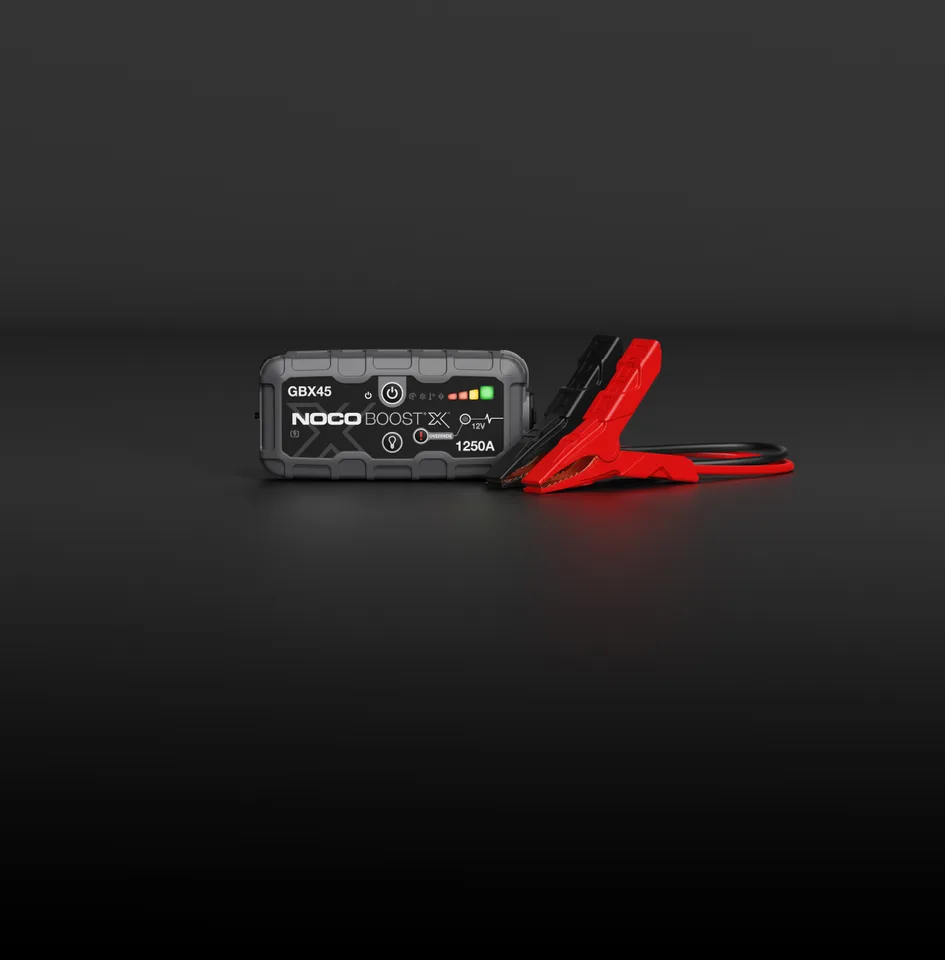
NOCO Boost X GBX45 1250A Jump Starter
Verdict
Choose this when NOCO guidance up to 6.5L petrol or 4.0L diesel and 60W USB-C input/output fit the vehicle, charger and device set.
Affiliate retailer link. Check current price, stock, delivery and returns before buying.
Highlights
- Drivers prioritising USB-C recharge and device-power flexibility within the maker's stated engine range.
Drawbacks
- Faster device charging can deplete reserve charge and requires compatible cables and chargers.
Buyer fit
Best for
- Drivers prioritising USB-C recharge and device-power flexibility within the maker's stated engine range.
Not for you if
- Faster device charging can deplete reserve charge and requires compatible cables and chargers.
Check before buying
- Confirm vehicle fit, USB-C requirements, stored charge and clamp procedure.
Top 4 comparison
Compare the useful differences, trade-offs and final checks side by side.
Before you compare
Check these first
- 1Confirm a compatible 12V lead-acid starter or auxiliary battery
- 2Match the vehicle and engine to current maker guidance
- 3Read both the vehicle and pack manuals
Your four roles
1Best compact all-rounderRing RJS020 Compact Jump StarterDrivers wanting a compact jump pack plus documented phone-charging outputs.
Trade-off:Using it as a power bank reduces the stored charge available for a later starting attempt.
Not ideal for:Using it as a power bank reduces the stored charge available for a later starting attempt.
Check:Confirm vehicle fit, charging cables, clamp procedure and recharge state before each journey.
2Best lower-output petrol optionNOCO GB20 500A Jump StarterDrivers of a compatible petrol vehicle who want a compact current pack with a documented USB device-power function.
Trade-off:The maker does not list it for diesel engines, and using it as a power bank reduces stored charge available for a later starting attempt.
Not ideal for:The maker does not list it for diesel engines, and using it as a power bank reduces stored charge available for a later starting attempt.
Check:Confirm petrol-engine fit, 12V lead-acid compatibility, stored charge, clamp access and the current Halfords return terms.
3Best 60W USB-C alternativeRing RJS030 Compact Jump StarterDrivers needing the maker's broader engine guidance and a higher-output USB-C route.
Trade-off:The larger pack takes more boot space and maker engine guidance is not a start guarantee.
Not ideal for:The larger pack takes more boot space and maker engine guidance is not a start guarantee.
Check:Match the exact vehicle battery and engine to the maker guidance and manual before use.
4Best Boost X device-power optionNOCO Boost X GBX45 1250A Jump StarterDrivers prioritising USB-C recharge and device-power flexibility within the maker's stated engine range.
Trade-off:Faster device charging can deplete reserve charge and requires compatible cables and chargers.
Not ideal for:Faster device charging can deplete reserve charge and requires compatible cables and chargers.
Check:Confirm vehicle fit, USB-C requirements, stored charge and clamp procedure.
| Pick | Pick role | Best for | Avoid if | Key trade-off | Check before buying | Warranty/support status | Review/evidence basis | Retailer |
|---|---|---|---|---|---|---|---|---|
| 1. Ring RJS020 Compact Jump Starter | Best compact all-rounder | Drivers wanting a compact jump pack plus documented phone-charging outputs. | Using it as a power bank reduces the stored charge available for a later starting attempt. | Using it as a power bank reduces the stored charge available for a later starting attempt. | Confirm vehicle fit, charging cables, clamp procedure and recharge state before each journey. | Check the current UK seller or maker warranty, exclusions, return window and exact variant before purchase; no warranty outcome is asserted here. • Use the current maker instructions and vehicle manual for connection, compatibility, storage, care and operating limits. | Ring RJS020 official product page checked 2026-08-03: https://www.ringautomotive.com/en/product/RJS020. Used for exact identity and the listed objective specifications only. | No retailer link |
| 2. NOCO GB20 500A Jump Starter | Best lower-output petrol option | Drivers of a compatible petrol vehicle who want a compact current pack with a documented USB device-power function. | The maker does not list it for diesel engines, and using it as a power bank reduces stored charge available for a later starting attempt. | The maker does not list it for diesel engines, and using it as a power bank reduces stored charge available for a later starting attempt. | Confirm petrol-engine fit, 12V lead-acid compatibility, stored charge, clamp access and the current Halfords return terms. | Check the current UK seller or maker warranty, exclusions, return window and exact variant before purchase; no warranty outcome is asserted here. • Use the current maker instructions and vehicle manual for connection, compatibility, storage, care and operating limits. | NOCO GB20 official specification page checked 2026-08-03: https://no.co/gb20/specs. Used for exact identity and the listed objective specifications only. | No retailer link |
| 3. Ring RJS030 Compact Jump Starter | Best 60W USB-C alternative | Drivers needing the maker's broader engine guidance and a higher-output USB-C route. | The larger pack takes more boot space and maker engine guidance is not a start guarantee. | The larger pack takes more boot space and maker engine guidance is not a start guarantee. | Match the exact vehicle battery and engine to the maker guidance and manual before use. | Check the current UK seller or maker warranty, exclusions, return window and exact variant before purchase; no warranty outcome is asserted here. • Use the current maker instructions and vehicle manual for connection, compatibility, storage, care and operating limits. | Ring RJS030 official product page checked 2026-08-03: https://www.ringautomotive.com/en/product/RJS030. Used for exact identity and the listed objective specifications only. | No retailer link |
| 4. NOCO Boost X GBX45 1250A Jump Starter | Best Boost X device-power option | Drivers prioritising USB-C recharge and device-power flexibility within the maker's stated engine range. | Faster device charging can deplete reserve charge and requires compatible cables and chargers. | Faster device charging can deplete reserve charge and requires compatible cables and chargers. | Confirm vehicle fit, USB-C requirements, stored charge and clamp procedure. | Check the current UK seller or maker warranty, exclusions, return window and exact variant before purchase; no warranty outcome is asserted here. • Use the current maker instructions and vehicle manual for connection, compatibility, storage, care and operating limits. | NOCO GBX45 official specification page checked 2026-08-03: https://no.co/gbx45/specs. Used for exact identity and the listed objective specifications only. | Check retailer price |
Choose this if / Avoid this if
Rule out poor-fit options before comparing finer details.
Avoid if
- The vehicle uses an unsupported voltage or battery arrangement
- The vehicle manual prohibits this connection method
- The battery problem needs diagnosis or professional recovery
- You expect device charging without reducing starting reserve
- The exact model destination or instructions cannot be confirmed
Dealbreakers
- The exact delivered model differs
- Vehicle voltage battery chemistry engine guidance or terminal access is unresolved
- The pack clamps cables or case are damaged
- Safe connection and disconnection instructions are unavailable
- A guaranteed-start or traction-battery use case is being assumed
Check before buying
- Confirm a compatible 12V lead-acid starter or auxiliary battery
- Match the vehicle and engine to current maker guidance
- Read both the vehicle and pack manuals
- Confirm terminal and clamp access
- Check stored charge cables charger and storage limits
- Recheck exact model seller delivery warranty and returns
Choose another shortlist if
- Use the compact jump-starter route when device power is unimportant
- Use the larger-engine route when engine guidance is the dominant constraint
- Use professional roadside assistance when the fault or safe connection route is uncertain
- Use a dedicated power bank when device charging is the main job
Detailed buyer guidance
Vehicle fit comes before the power-bank feature
A jump starter is not a general-purpose battery pack with clamps added. First confirm the vehicle uses a compatible 12V lead-acid starter or auxiliary battery, that the current vehicle manual permits the connection method, and that the maker’s engine guidance covers the exact vehicle. Only then compare device outputs.
Every phone or laptop charge reduces the stored energy left for a later starting attempt. Keep a separate power bank when device charging is the main job.
Who this is for
Drivers who have confirmed a compatible 12V lead-acid starter or auxiliary battery and want emergency starting backup with a documented USB charging route.
Who this is not for
Buyers who still need battery-fault diagnosis, an unsupported voltage or chemistry, an EV traction-battery solution, or a general-purpose device power bank rather than a vehicle-first jump starter.
Quick decision
- Ring RJS020: Choose this when a compact 1000A jump pack, maker guidance up to 5L petrol or 2L diesel, and 30W USB-C device charging fit the vehicle and travel routine. Trade-off: It has less engine and USB-C headroom than the larger Ring and NOCO Boost X options, and device charging consumes starting reserve.
- NOCO GB20: Choose this for a compatible 12V lead-acid petrol vehicle within NOCO guidance up to 4.0L when a smaller 500A pack and basic USB charging are enough. Trade-off: NOCO does not list diesel-engine support for GB20, and its USB output is a slower secondary feature rather than laptop-class power.
- Ring RJS030: Choose this when Ring guidance up to 6L petrol or 3L diesel and 60W USB-C input/output are useful enough to justify the larger 1500A pack. Trade-off: The larger pack takes more storage space, and neither the 1500A label nor maker engine guidance guarantees a start.
- NOCO Boost X GBX45: Choose this when NOCO guidance up to 6.5L petrol or 4.0L diesel and 60W USB-C input/output fit the vehicle, charger and device set. Trade-off: It needs a compatible USB-C charger and cable for the faster recharge route, while device charging still consumes starting reserve.
The four exact configurations
1. Ring RJS020 — Best compact all-rounder
The checked manufacturer record binds exact RJS020, 1000A, 12V, the maker’s 5L Petrol engine wording and its PD30W Fast Charge device-power wording. Choose this when a compact 1000A jump pack, maker guidance up to 5L petrol or 2L diesel, and 30W USB-C device charging fit the vehicle and travel routine.
Check before buying: It has less engine and USB-C headroom than the larger Ring and NOCO Boost X options, and device charging consumes starting reserve. Confirm the exact vehicle, battery arrangement, manual, terminal access, stored charge, cables, delivery, warranty and returns.
2. NOCO GB20 — Best lower-output petrol option
The checked manufacturer record binds exact GB20, 500A, 12V, the maker’s 4.0L engine wording and its USB CHARGE & RECHARGE device-power wording. Choose this for a compatible 12V lead-acid petrol vehicle within NOCO guidance up to 4.0L when a smaller 500A pack and basic USB charging are enough.
Check before buying: NOCO does not list diesel-engine support for GB20, and its USB output is a slower secondary feature rather than laptop-class power. Confirm the exact vehicle, battery arrangement, manual, terminal access, stored charge, cables, delivery, warranty and returns.
3. Ring RJS030 — Best 60W USB-C alternative
The checked manufacturer record binds exact RJS030, 1500A, 12V, the maker’s 6L Petrol engine wording and its PD60W Fast Charge device-power wording. Choose this when Ring guidance up to 6L petrol or 3L diesel and 60W USB-C input/output are useful enough to justify the larger 1500A pack.
Check before buying: The larger pack takes more storage space, and neither the 1500A label nor maker engine guidance guarantees a start. Confirm the exact vehicle, battery arrangement, manual, terminal access, stored charge, cables, delivery, warranty and returns.
4. NOCO Boost X GBX45 — Best Boost X device-power option
The checked manufacturer record binds exact GBX45, 1250A, 12V, the maker’s 6.5L engine wording and its 60-watts of power device-power wording. Choose this when NOCO guidance up to 6.5L petrol or 4.0L diesel and 60W USB-C input/output fit the vehicle, charger and device set.
Check before buying: It needs a compatible USB-C charger and cable for the faster recharge route, while device charging still consumes starting reserve. Confirm the exact vehicle, battery arrangement, manual, terminal access, stored charge, cables, delivery, warranty and returns.
What the labels do not prove
Peak current is a manufacturer product label, not an independently measured result here. Engine-size guidance is an upper eligibility boundary, not a guarantee that a flat, cold, damaged or unsuitable battery will start. UK Shortlists has not inspected your vehicle or performed a start.
Do not connect a portable jump starter to an EV traction battery. For any hybrid or EV, use only the exact auxiliary-battery procedure in the current vehicle manual or obtain qualified roadside help.
Device charging and recharge routine
RJS020 lists 30W USB-C PD, while RJS030 and GBX45 document 60W USB-C routes. GB20 provides a lower-power USB charging function. Confirm the device’s required protocol and power, the included cables, and the charger needed to replenish the pack. Recharge after use and follow the current maker storage and inspection instructions.
What would change the order
GB20 moves ahead only for a compatible petrol vehicle where its lower-output compact role is enough. RJS030 moves ahead when its broader Ring engine guidance and 60W USB-C route justify the larger pack. GBX45 moves ahead when its NOCO engine guidance and 60W USB-C input/output better match the vehicle and device set. Price, ratings, reviews and commission do not change the order.
When another role fits better
The first option is a useful starting point, not a universal winner. Move another role ahead when its use case, fit or ownership trade-offs match you better.
Known limitations
UK Shortlists has not attempted a vehicle start, measured peak current or USB output, inspected a vehicle battery, or assessed long-term durability. Manufacturer labels and guidance do not prove an outcome for a particular vehicle.
How we chose
The checks behind the four picks
We kept the established Top 4 and rechecked each exact model against its current manufacturer record, official image and UK destination. Vehicle voltage and maker engine guidance outrank USB output; price, ratings, stock and commission do not set the order.
- Step 1: Exact model and 12V scope
- Step 2: Maker engine guidance
- Step 3: Published peak-current label
- Step 4: Device-output option
- Step 5: Stored-charge and recharge routine
- Step 6: Clamp access and vehicle instructions
- Step 7: Current exact UK destination
Disclosure
Last reviewed: 03/09/2026
UK Shortlists may earn a commission when you use some retailer links. This does not increase the price you pay.
As an Amazon Associate we earn from qualifying purchases.
Retailers cannot pay to change which products we recommend or their order.
Prices, stock, delivery and returns can change. Confirm the final details with the retailer before buying.
Read more about how UK Shortlists makes money, retailer checks, and how corrections are handled.
Who checked this shortlist?
- Written / compiled by:
- Outdoors & Mobility Desk
- Reviewed by:
- UK Shortlists Editorial Team
- Last reviewed:
- 03/09/2026
- Review basis:
- Criteria-based comparison
We compare published product information, retailer details and the buying criteria shown above. UK Shortlists does not currently publish claims based on first-party product use, laboratory testing or long-term testing.
FAQs & alternatives
Does the peak-current number guarantee the vehicle will start?
No. Battery condition, temperature, engine, connection, stored charge and manufacturer instructions all matter. Treat the label and engine guidance as eligibility inputs, not a promise.
Can I charge a laptop from every pick?
No. Check the exact voltage and power required by the device. RJS030 and GBX45 have documented 60W USB-C routes; GB20 is a lower-power USB option, and RJS020 lists 30W USB-C PD.
Did the Amazon link change the order?
No. The preserved Top 4 order is unchanged. One exact Amazon destination is available for GBX45; the other three actions are non-affiliate retailer references.
Also consider
- Choose a dedicated power bank when vehicle starting is not required
- Choose a battery charger or maintainer for planned charging rather than emergency starting
- Call a qualified roadside service when diagnosis or safe terminal access is unresolved
Newsletter
Want the next useful buying check?
Get occasional UK Shortlists updates for decisions like this. Unsubscribe at any time.
Related shortlists
- Best Jump Starters for Larger Engines in the UK (2026)
Use this related shortlist to compare trade-offs before finalising your Top 4 pick.
- Best Compact Car Jump Starters in the UK (2026)
Use this related shortlist to compare trade-offs before finalising your Top 4 pick.
- Roadside-needs chooser
Separate emergency starting, charging, inflation and device-power jobs before buying.