
The short version
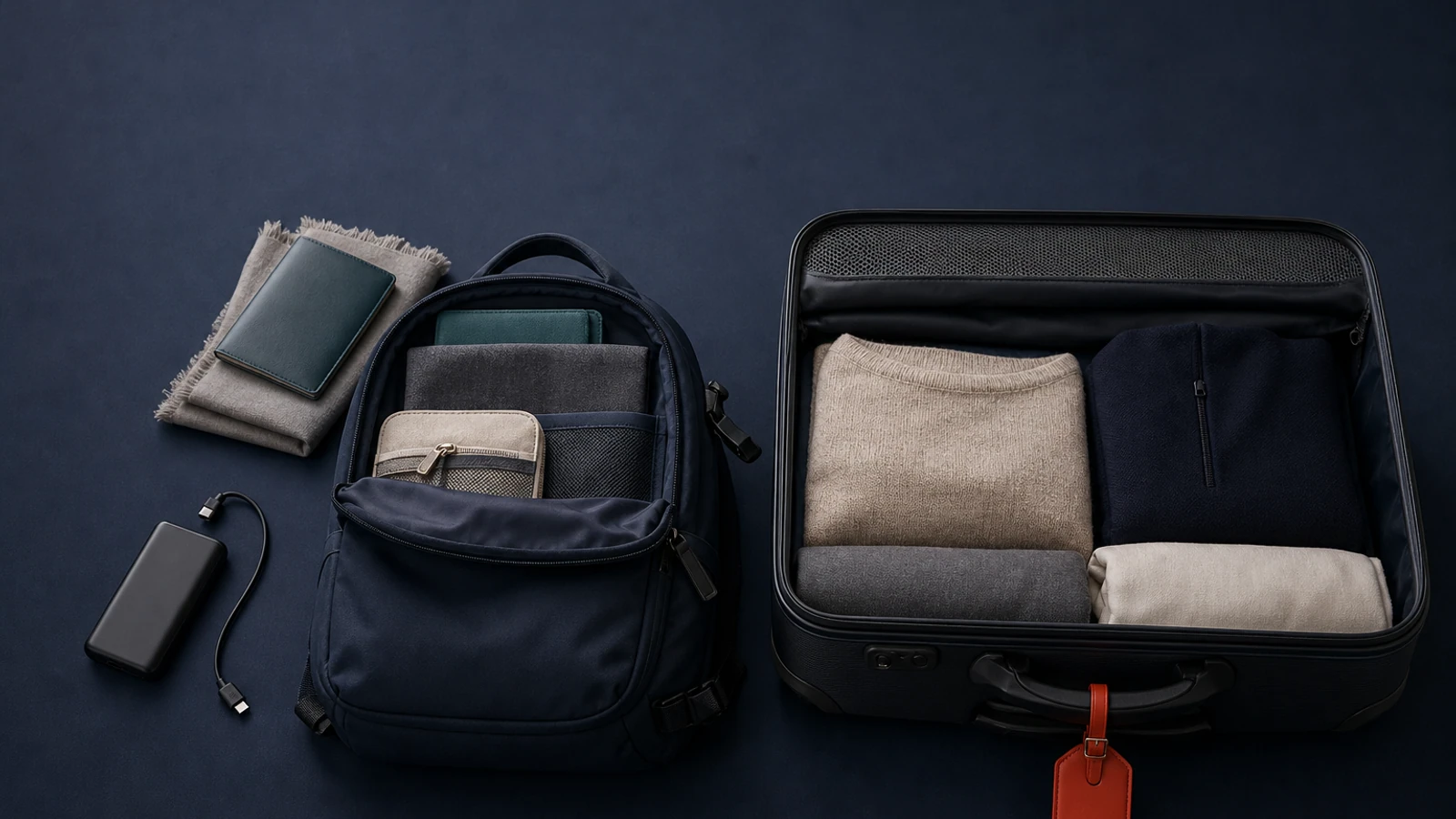
Put a power bank in your carry-on baggage, not in a checked suitcase. Current UK Civil Aviation Authority guidance also says:
- no more than two power banks per person;
- protect each one from damage and short circuits;
- do not recharge a power bank on board;
- the power bank should not be used to charge another device on board;
- check the Watt-hour rating and your airline’s own rules before every trip.
Those checks still do not guarantee acceptance. An airline, airport or security team can apply additional restrictions, and the rules may differ across connection legs.
Why this is news in summer 2026
An ICAO addendum changed the passenger and crew rules for power banks from 27 March 2026, as explained on the CAA rules page. The CAA’s 22 July summer-flight warning then put new figures behind the message:
- 30 million passengers were expected to leave the UK during July and August;
- 49% of travellers said they fly with a power bank;
- 36% were unaware of the danger of packing lithium batteries in checked baggage;
- reports of passenger devices overheating or malfunctioning nearly doubled from 2024 to 2025.
These are CAA figures, not UK Shortlists estimates. They explain why the packing rule is receiving more attention; they do not calculate the risk on an individual flight.
Cabin, not hold
A power bank contains lithium cells and now has its own passenger provisions, separate from the general spare-battery rules. It needs to remain in the cabin where a problem can be noticed and dealt with. Do not place it in checked baggage.
This also matters when a cabin bag is taken from you at the gate. If the bag will be placed in the hold, remove the power bank and keep it with you, following the airline or ground crew’s instructions.
Two per person, protected separately
The CAA’s rule-change summary says passengers may carry a maximum of two power banks.
Each one should be individually protected when it is not in use. Practical options include the original packaging, a protective pouch or another arrangement that prevents the terminals from short-circuiting. Do not leave a loose power bank beside keys, coins or other metal objects.
Do not recharge it on board
Under the amended rules, a power bank must not be recharged on the aircraft. The CAA also says a power bank should not be used to charge another portable device on board.
Airlines can set stricter use and storage rules, including where the power bank must be kept during the flight. Check the airline’s current dangerous-goods or battery page and follow crew instructions.
Check the Watt-hour label
The Watt-hour rating is the number that matters for airline battery limits:
- up to 100Wh is normally allowed without airline approval;
- more than 100Wh and no more than 160Wh requires airline approval;
- more than 160Wh is prohibited in passenger baggage.
If the outer case does not state Watt-hours, the CAA gives this calculation:
Voltage (V) × milliamp hours (mAh) ÷ 1,000 = Watt-hours (Wh)
Do not rely on a calculation if the model identity, voltage or capacity is unclear. Ask the manufacturer or airline, or choose a product with an unambiguous label.
Check condition before you pack
Do not travel with a battery that is swollen, bulging, changing shape, overheating or otherwise damaged. Do not put it in general waste. Use a local battery or electronics recycling route that accepts the item.
A high star rating does not replace this check. Confirm the exact model, responsible seller, capacity label, return route and current recall status before buying or packing.
A practical order of operations
- Find the exact model and Watt-hour rating.
- Check for damage, swelling, heat or a recall notice.
- Confirm that you will carry no more than two.
- Protect each power bank from short circuits.
- Read the rules for every airline and connection leg.
- Keep it in carry-on baggage and accessible if the bag may be gate-checked.
- Follow the airline’s onboard use and storage instructions.
Only after those checks should you compare products. The Power Bank Fit Checker can route you by device power, carry size and use case, but it does not certify airline acceptance.
Official sources checked
- CAA summer-flight warning, 22 July 2026
- CAA power-bank rule changes effective 27 March 2026
- CAA Pack right. Safe flight.
- GOV.UK hand-luggage restrictions
Sources and guidance were reviewed on 27 July 2026. Recheck them and your airline before travel.